Monetization, minus the developer part.

Lightswitch lets non-technical founders add subscriptions, paywalls and auth to AI-built apps without ever touching Stripe or Supabase. Over a six-week fractional sprint I designed the onboarding wizard, a design system, and the auth and checkout components the team built its soft launch on.

RoleFractional product designer, onboarding, design system, auth + checkout UI
Scope6-week sprint, 2–3 syncs a week
TeamLightswitch, pre-seed, two founders + one engineer
TimelineSep–Oct 2025
6wks
Nothing to soft-launch-ready
2–3/wk
Embedded design syncs with the founders
3-in-1
Onboarding wizard · design system · auth + checkout
01 · The problem

The whole promise lived in a screen that didn't exist.

Lightswitch's pitch is that a non-technical founder can add payments, subscriptions and auth to an app built with tools like Lovable, Cursor or Replit, without ever touching Stripe or Supabase. All of that complexity had to disappear behind one product surface, the onboarding wizard, and it hadn't been designed yet.

Monica, the CEO, had spent a decade in consumer subscriptions but was stuck building a design system from scratch with no onboarding UX. She brought me in as a fractional designer to design the core setup flow, stand up a design system that could act as a forcing function for product decisions, and hand her technical co-founder auth and payment components ready to build from.

02 · The approach

Hide the hard parts. Preview everything.

I designed the onboarding as a guided wizard: connect Supabase over OAuth instead of pasting keys, set the app basics, build a pricing plan on an interactive table that previews the customer-facing result in real time, connect Stripe through an embedded component that pulls the keys automatically, and configure Google Auth. One deliberate call: put pricing setup before the Stripe Connect step, so founders hit the rewarding part first and push through the tedious middle instead of dropping off.

Around it, a three-column dashboard, a collapsible dark sidebar, a content column, and a preview column showing the end app update at every step, and a standardized set of auth and checkout components: sign-in, sign-up, password reset, one- and two-plan pricing pages, and an embedded Stripe checkout. Customization was kept to a primary color and a logo, modeled on Shopify's checkout: trustworthy and consistent, not endlessly brandable. Opinionated defaults over configuration, plain language over developer-speak, and a preview at every step so nothing shipped blind.
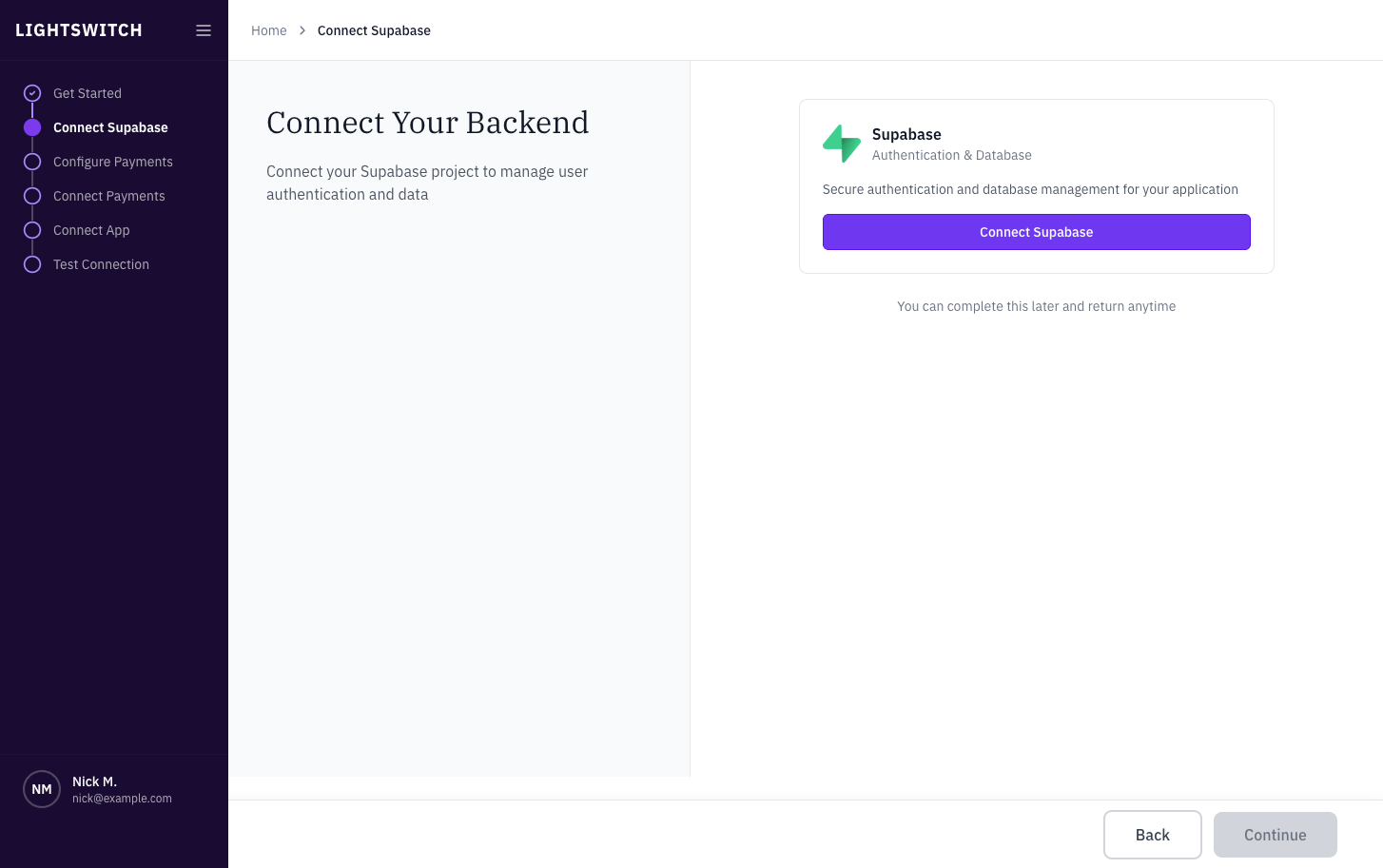
Lightswitch onboarding wizard, the Connect Supabase step
The onboarding wizard: connect Supabase over OAuth, no keys to paste, with the setup steps down the left.
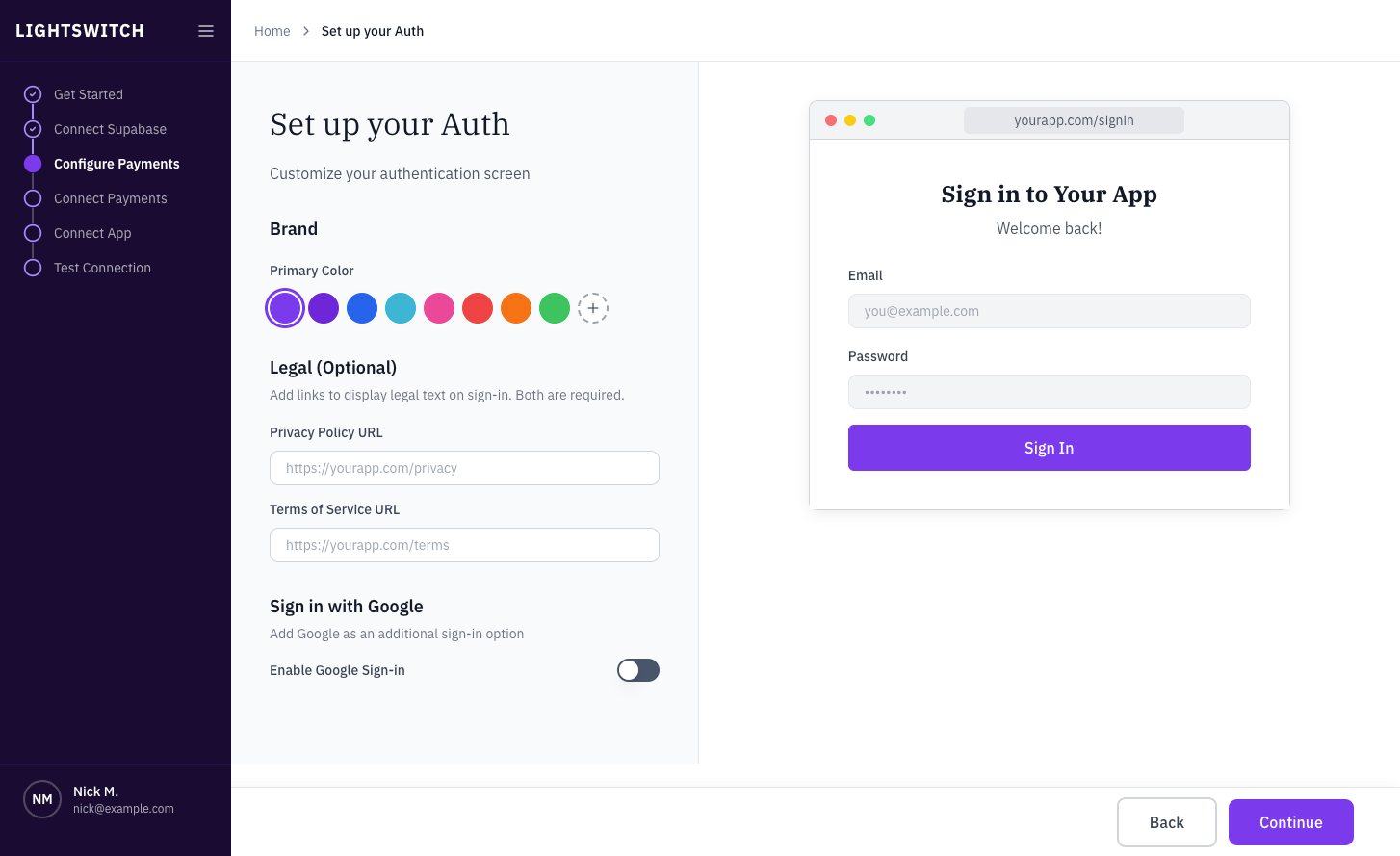
Lightswitch auth setup with a live sign-in preview
Auth setup, with a live preview of the customer's sign-in screen updating as you configure it.
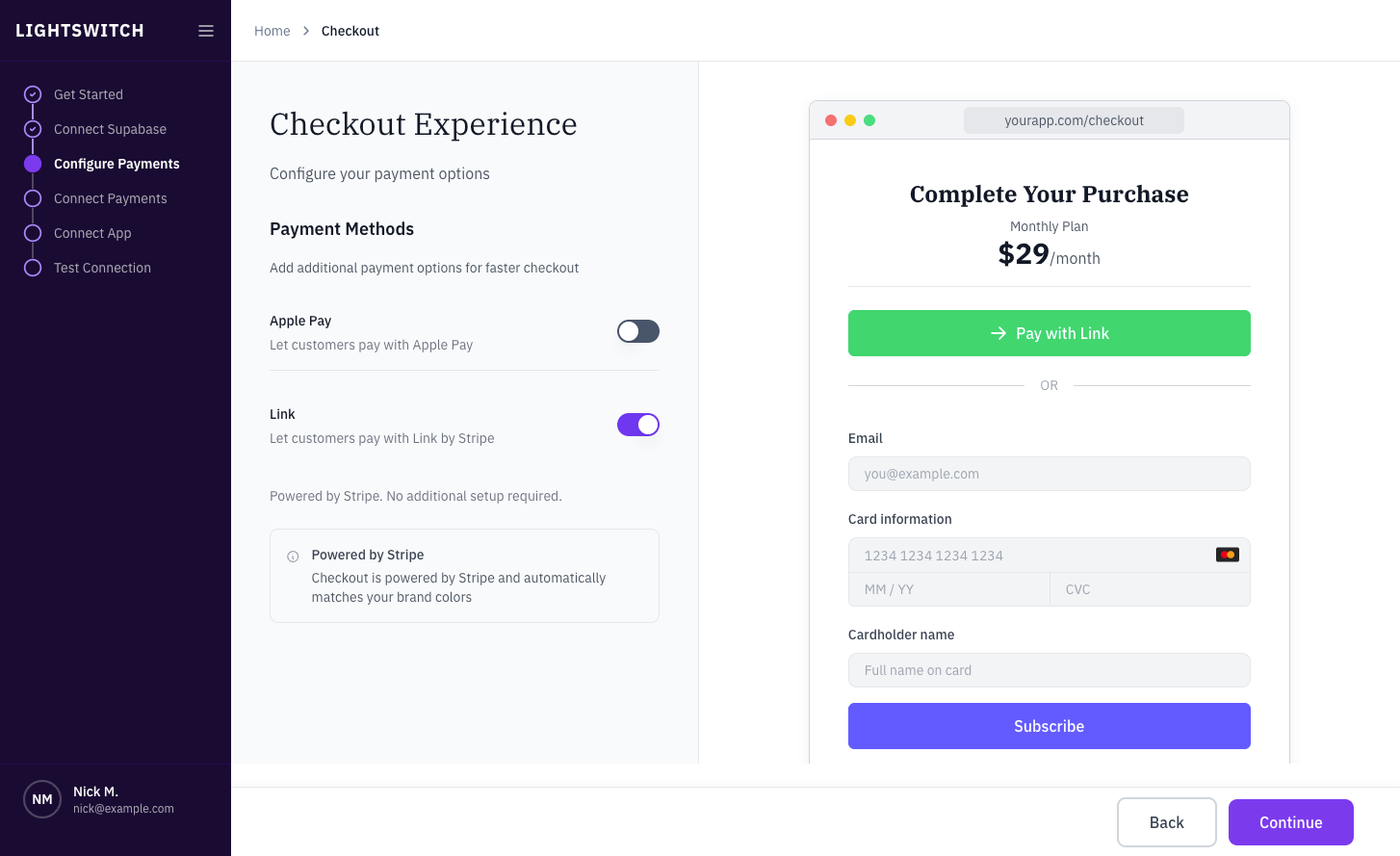
Lightswitch checkout configuration with a live Stripe checkout preview
Checkout configuration, previewing the end customer's Stripe checkout before going live.

The job wasn't to make it pretty. It was to settle a hundred product decisions by drawing them, so the team could stop debating and start building.

Humayun Khan · Studio Maya

03 · The outcome

Built, and days from a soft launch.

In six weeks the onboarding wizard, design system and component set went from nothing to prototypes the technical co-founder was shipping production code from, delivered in Replit and Figma, usually within a day of each sync. By the final sprint sync the monetization flow was nearly complete and the team was scoping a soft launch the following week, onboarding the first users by hand.

The engagement was scoped to continue past launch, with the next sprints already mapped: transactional emails, upgraded end-user pages, and eventually a visual workflow builder for freemium and premium journeys.

Got something that needs to get a yes?